


Types of Emergency Road Flares: Fusee vs LED
Emergency road signaling devices fall into a few groups. Fusees are single-use pyrotechnic sticks that burn for a set time, commonly 15 to 30 minutes. LED road flares are battery-powered, reusable lights; sequential models flash in a moving pattern to guide drivers around a scene. Warning triangles are reflective, have no flame, and remain a standard option for commercial motor vehicles. Flare guns are distress signals, not a typical tool for marking a lane. Chemical light sticks glow without a flame but are dimmer and are one-time use. As of 23 March 2026, FMCSA no longer lists liquid-burning flares (oil pots) as an accepted warning device. A commercial motor vehicle must carry three FMVSS 125 triangles or at least six fusees, unless it is using a device covered by a current FMCSA exemption.
Sources: 49 CFR 393.95, Federal Register, 19 February 2026, document 2026-03261, Orion Highway FAQ, NIJ 224277.
Emergency road flare types compared
| Device | Burn or run time | Open flame | Reusable | Typical use |
|---|---|---|---|---|
| Fusee (pyrotechnic) flare | Commonly 15 to 30 minutes | Yes | No | Roadside warning |
| LED road flare (including sequential) | Hours, varies by model and pattern. pi-lit sequential flares run 20+ hours in the default wave pattern | No | Yes | Roadside warning and sequential guidance |
| Warning triangle | Not a burn time; stays in place until retrieved | No | Yes | Standard commercial motor vehicle warning device |
| Flare gun | A short distress burst | Yes | The launcher is reusable; the cartridge is not | Distress signaling, not a typical lane marker |
| Chemical light stick | Hours, but dimmer than a flare | No | No | A weaker, one-time signaling option |
| Oil pot / liquid-burning flare | Historical | Yes | No | Not an accepted FMCSA warning device as of 23 March 2026 |
Burn times for fusees are from manufacturer ratings and NIJ 224277. pi-lit run time is from the live product page. Oil-pot status is from Federal Register document 2026-03261.
Fusee flares
Fusees are single-use pyrotechnic sticks. A typical highway fusee is a paper or fiber tube with a strike cap. You ignite it with that cap, not by breaking the tube open to light a wick. For the chemistry and lighting steps, see How Do Road Flares Work?. Common highway ratings are 15 to 30 minutes; details are in How Long Do Road Flares Burn?. Unused or spent fusees need proper disposal. See How to Dispose of Old Road Flares Safely.
Warning triangles
Warning triangles are reflective, have no flame, and stay in place until a crew retrieves them. Under 49 CFR 393.95(f), three bidirectional emergency reflective triangles that meet FMVSS 125 remain a standard option for commercial motor vehicles. They are a related signaling device, not a flare.
Flare guns
Flare guns are distress signals. They are not a typical tool for marking a lane or a stopped vehicle on the shoulder. A flare-gun cartridge produces a short, high burst meant to be seen by rescuers, not a timed roadside burn.
Chemical light sticks
Chemical light sticks glow without a flame. Other guides mention them as a weaker, one-time option. They are dimmer than a fusee or an LED road flare and are not reusable.
FMCSA warning devices and the 2026 oil-pot change
Liquid-burning flares, often called oil pots, were removed as an accepted warning device effective 23 March 2026, in Federal Register, 91 FR 7867, 19 February 2026, document 2026-03261. Treat oil pots as historical, not current.
Current 49 CFR 393.95(f) allows three bidirectional emergency reflective triangles that meet FMVSS 125, or at least six fusees. Other devices may be carried only in addition to, but not in lieu of, those required devices. Flame-producing devices remain restricted on certain hazardous-materials and compressed-gas vehicles under 393.95(g). Required fusees must be capable of burning 30 minutes and meet UL 912, under 393.95(j).
pi-lit Smart Sequential Road Flares are covered by an FMCSA exemption from 49 CFR 393.95(f) (Federal Register document 2023-13205), effective 27 June 2023 through 27 June 2028. Motor carriers may use them in orange or red in place of the three reflective triangles, fusees, or liquid-burning flares when a commercial motor vehicle is stopped on the highway or shoulder, deploying at least three flares as 49 CFR 392.22 requires. That exemption applies to this product when its conditions are met; it does not mean every LED flare qualifies. See also trucking.
LED road flares
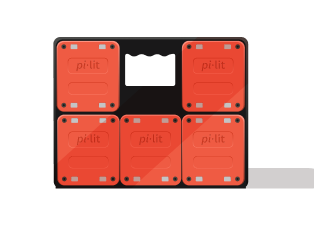
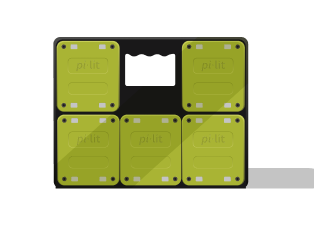
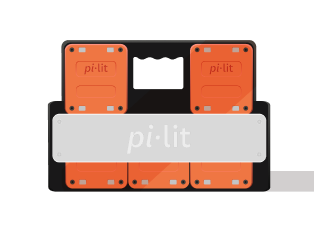
LED road flares are battery-powered, reusable lights with no open flame. Sequential models flash in a moving pattern to guide drivers around a scene. pi-lit Smart Sequential Road Flares deploy in under 60 seconds, run 20+ hours in the default wave pattern, are crush-rated to 30,000 lbs, and are weatherproof. The flares link automatically over a 1.5-mile radio range. Reusable kits replace single-use fusees over time; see the product page and the law enforcement fusee cost calculator. For a direct fusee comparison, see LED Road Flares vs. Fusee Flares.
Cloud-enabled devices
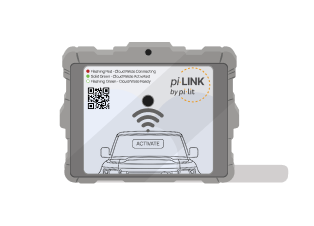
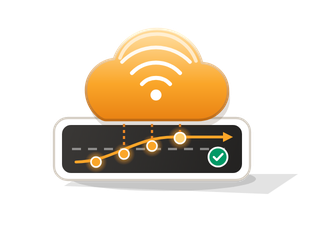
Temporary traffic control lamps can connect to cloud-based systems to share location and status when a lane closure changes. Fleet tools such as piLINK can send driver alerts before they reach the scene, which matters on rural roads where incidents such as tire blowouts and crashes can be harder to see in time.
Who uses these devices
These signaling tools show up in law enforcement, fire and rescue, state DOT, and utility work, as well as on commercial vehicles. Choose the device that matches the rule that applies to the vehicle or the scene, and keep unused fusees out of ordinary trash.
Frequently Asked Questions
What are the main types of emergency road flares?
Fusee (pyrotechnic) flares, LED road flares, and, for some kits, chemical light sticks. Warning triangles are a related signaling device, not a flare.
Can a commercial truck replace triangles with LED flares?
Not as a general rule. 49 CFR 393.95(f) names triangles or fusees. Other devices may be used in addition, not in place, of those, except where an FMCSA exemption applies. pi-lit Smart Sequential Road Flares have an exemption through 27 June 2028. See the product page for the conditions.
What happened to oil pots?
FMCSA removed liquid-burning flares as an accepted warning device effective 23 March 2026.
Do LED flares work in rain and wind?
They have no open flame to extinguish. pi-lit sequential flares are described on the product page as weatherproof, with a tilt sensor that aims light at approaching drivers.