


How Do Road Flares Work? Fusee Chemistry
Road flares, often called fusees, are pyrotechnic signaling tubes. You ignite one by striking a cap across an igniter, the way you would strike a match. The composition burns at a high temperature and produces a bright red or red-orange flame. Strontium nitrate is the usual colorant in manufacturer safety data sheets, and many formulations also include oxidizers such as potassium perchlorate. Highway flares are commonly sold in 15, 20, and 30 minute burn times, and some makers also sell 5 and 10 minute ratings. Follow the lighting instructions printed on the flare, keep it away from spilled fuel and dry vegetation, and dispose of unused or spent flares according to local hazardous-waste rules.
Sources: Orion SDS (May 2012), Orion Highway FAQ, NIJ 224277, 49 CFR 393.95(j).
How a fusee road flare works
A typical highway fusee is a paper or fiber tube filled with a pyrotechnic composition and fitted with a strike cap, often with a wax coating. That is not the same as a plastic stick that breaks open to expose a wick. Formulas vary by maker and product line, and some newer retail flares are sold as non-perchlorate, so do not treat every flare as identical.
An Orion Safety Products SDS, revision May 2012, lists a common formulation as strontium nitrate (less than 75 percent), potassium perchlorate (less than 50 percent), potassium chlorate, sulfur, shellac, paraffinic oil, and wood flour. Strontium nitrate is the usual source of the red color. Always read the safety data sheet for the flare you carry.
How to ignite a road flare
Follow the lighting instructions printed on the flare in your hand. For a typical strike-cap highway fusee, the method described in the Orion Highway FAQ is to remove the lid, twist off the cap, and strike the igniter on the cap's scratch surface, pointing the flare away from your face and body. Place the flare on pavement. Do not drop it. If you must carry a lit flare, keep the burning end down. Keep the flare away from spilled fuel and dry vegetation.
Do not assume a match or lighter is the right way to start a highway fusee, and do not count on a wick appearing when the tube is struck. The printed instructions on that flare are the ones that matter.
How long road flares last
Highway fusees are commonly sold in 15, 20, and 30 minute burn times, and some makers also sell 5 and 10 minute ratings, according to the Orion Highway FAQ. The National Institute of Justice evaluation of chemical flares reports that traditional magnesium highway flares normally burn from 15 to 30 minutes. For commercial motor vehicles, 49 CFR 393.95(j) requires each fusee used as a required warning device to be capable of burning for 30 minutes and to meet UL 912. For ratings, weather effects, and LED run times, see How Long Do Road Flares Burn?.
How to dispose of a road flare
Do not treat a metal can of water as the standard disposal method, and do not bury unused flares. Unused or expired fusees are often handled as household hazardous waste, and a partly burned flare should not be stored in a vehicle or any closed container. See How to Dispose of Old Road Flares Safely for the sourced guidance.
LED alternatives to traditional road flares
LED road flares do not use an open flame and do not leave a pyrotechnic residue. For a side-by-side comparison of fusees and LED flares, see LED Road Flares vs. Fusee Flares. For the wider set of signaling devices, including triangles and flare guns, see Types of Emergency Road Flares.
LED sequential flares
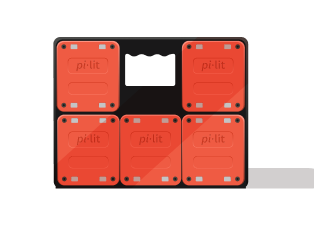
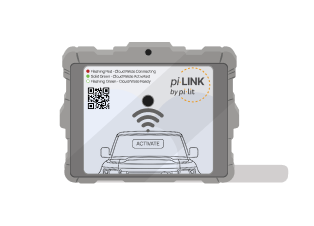
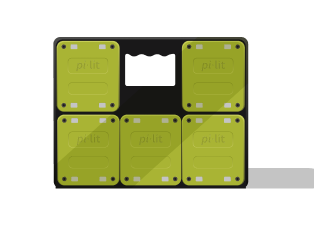
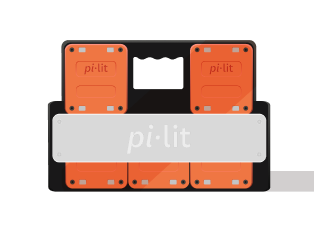
pi-lit Smart Sequential Road Flares deploy in under 60 seconds, run 20+ hours in the default wave pattern, are crush-rated to 30,000 lbs, and are weatherproof. The flares link automatically over a 1.5-mile radio range. They are covered by an FMCSA exemption from 49 CFR 393.95(f), effective 27 June 2023 through 27 June 2028, when the exemption conditions are met. Retrieve them at the end of the deployment, then recharge or fit new batteries for the next scene.
LED sequential lamps
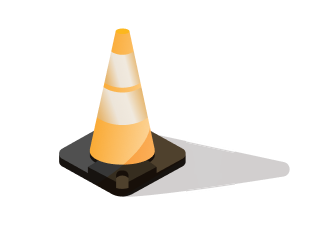
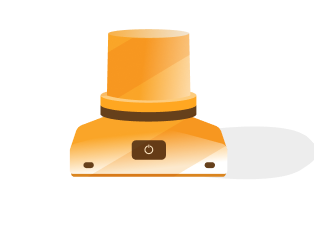
LED sequential lamps attach to traffic cones and use a moving flash pattern to mark a taper or a closed lane. They are a lighting tool for temporary traffic control, not a pyrotechnic flare.
Who uses sequential LED flares
Law enforcement, fire and rescue, state DOT, and utility crews use sequential LED flares to mark a scene without an open flame. pi-lit systems are protected by 66 Issued US patents. See the Smart Sequential Road Flares product page for the live specifications.
Frequently Asked Questions
What is a road flare made of?
Many highway fusees use a mixture that includes strontium nitrate for the red color, plus oxidizers, sulfur, and a binder. An Orion SDS lists strontium nitrate, potassium perchlorate, potassium chlorate, sulfur, shellac, paraffinic oil, and wood flour. Formulas vary, and some newer flares are sold as non-perchlorate. Always read the SDS for the product you carry.
How do you light a road flare?
For a typical strike-cap fusee, remove the cap and strike the igniter on the cap's scratch surface, pointing the flare away from your face and body. Place it on pavement. Do not drop it, and do not carry it with the burning end up. Follow the instructions on the flare in your hand.
How long does a road flare burn?
Most highway fusees burn 15 to 30 minutes. See How Long Do Road Flares Burn?
Are LED flares safer than fusees?
LED flares do not use an open flame and do not leave a pyrotechnic residue. pi-lit Smart Sequential Road Flares are reusable, deploy in under 60 seconds, and run 20+ hours in the default wave pattern. They are also covered by an FMCSA exemption through 27 June 2028 for use in place of triangles or fusees on commercial motor vehicles, when the exemption conditions are met.