

Sequential LED Road Flares vs Fusees: A Buyer's Guide for Agencies and Fleets
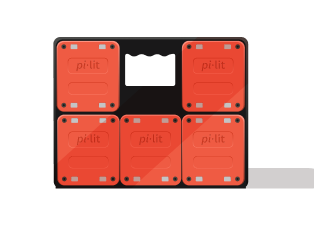
Short answer: Fusees are single-use pyrotechnic flares. They burn for a fixed time, usually 15 to 30 minutes, with an open flame and hot residue, and federal rules bar them from some hazardous materials vehicles and from vehicles fueled by compressed gas. Sequential LED road flares are reusable, battery-powered lights that flash in order, forming a moving pattern that shows drivers which way to merge. For an agency or fleet, the choice comes down to run time, durability in live traffic, how fast the set syncs, whether it counts as a required warning device on your commercial vehicles, and whether it connects to driver alerts and fleet records. pi-lit Smart Sequential Road Flares deploy in under 60 seconds, run 20+ hours in the default wave pattern, are crush-rated to 30,000 lbs, and are covered by a Federal Motor Carrier Safety Administration (FMCSA) exemption through June 27, 2028.
Sources: NIJ, Evaluation of Chemical and Electric Flares, Orion Safety Products, Highway FAQ, 49 CFR 393.95, eCFR, Federal Register 2023-13205.
Three kinds of roadside warning light, compared
Most agencies are choosing between three options. Here is how they compare on the questions procurement and safety officers actually ask.
| What to compare | Fusees (pyrotechnic flares) | Consumer LED flare kits | pi-lit Smart Sequential Road Flares |
|---|---|---|---|
| Crush rating | Not applicable. A fusee is a paper or fiber tube that is consumed as it burns. | Varies by product. Ask for a published, tested load rating. | Crush-rated to 30,000 lbs. Weatherproof, built for heavy trucks and snowplows. |
| Run time | Fixed by the product, commonly 15 to 30 minutes. Orion sells 5, 10, 15, 20 and 30 minute highway flares. Fusees carried as required warning devices on commercial motor vehicles must be able to burn for 30 minutes. Longer scenes need more fusees. | Varies by product, pattern and brightness. Ask for run time in the pattern you will actually use. | 20+ hours in the default wave pattern at normal brightness. Run time varies by pattern and brightness, and cold weather shortens it. |
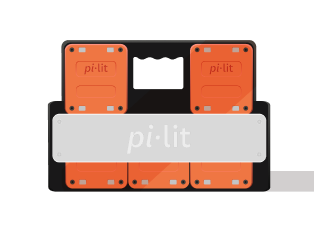
| Recharge and reuse | Single use. Each one burned has to be replaced. | Varies. Some are rechargeable, some take disposable batteries. | Rechargeable kits come in 4, 6, and 10 sets: about 6 hours from fully depleted, every flare charges at once in the case, and the lithium-ion battery is rated for 1,500 full charge cycles. Alkaline kits come in 4 and 6 sets and run on AA batteries. 6-set and 10-set docking stations charge rechargeable kits in the vehicle. |
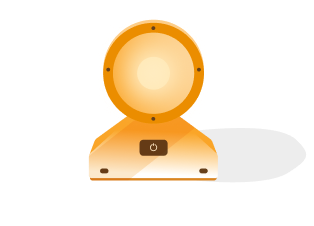
| Sequencing and sync | None. Each fusee burns on its own. | Varies. Some kits only flash, others sync. Ask how they sync, whether you have to pair or number them first, and how far apart they still stay in sync. | Automatic sync with no programming or pre-numbering. They link over a 1.5-mile radio range. 6 patterns: 4 sequential, 1 simultaneous, 1 steady burn. Reverse sequence at the press of a button, and several sets can sync together. |
| FMCSA status on commercial motor vehicles | Accepted. A stopped commercial vehicle needs 3 reflective triangles or at least 6 fusees. Fusees are barred on vehicles hauling Division 1.1 to 1.3 explosives, on flammable gas or liquid cargo tanks, and on vehicles fueled by compressed gas. Since March 23, 2026, liquid-burning flares (oil pots) are no longer an accepted warning device for stopped commercial vehicles. | Under 49 CFR 393.95(f)(3), other warning devices may be used in addition to, but not in place of, triangles or fusees, unless the specific product holds its own FMCSA exemption. Ask the vendor for the Federal Register notice. | Covered by an FMCSA exemption from 49 CFR 393.95(f), effective June 27, 2023 through June 27, 2028. Motor carriers may use them in orange or red in place of triangles or fusees, deploying at least 3 flares as 49 CFR 392.22 requires. |
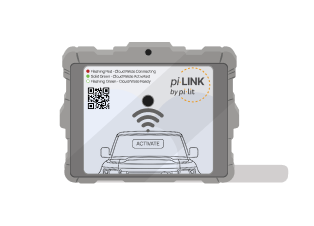
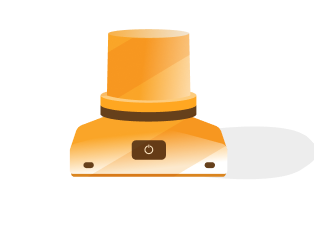
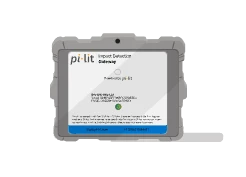
| Connected driver alerts | None. | Varies. Ask whether the lights can send a digital alert to drivers before they reach the scene. | With piLINK or the pi-lit app, deployed flare locations are broadcast to navigation apps before drivers reach the scene. piLINK can go live automatically when the light bar comes on. |
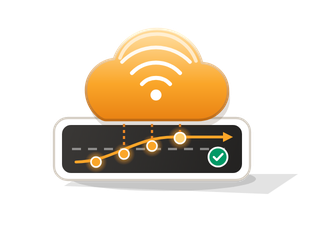
| Fleet reporting | None. Usage is tracked only through reorders. | Varies. Ask whether deployments are logged and reportable. | Every connected set links to pi-lit Cloud, with live device status, alerts and events logged the moment a deployment goes live, impact notifications, and reporting by date range for supervisors and budget reviews. Cloud access is included with every connected system. |
| Contract buying | Widely stocked. Check your existing supply contracts. | Varies. Many sell retail only. Ask about cooperative contracts and purchase orders. | Awarded BuyBoard Contract #803-26 for eligible members. Quoted against Sourcewell and the Purchasing Cooperative of America (PCA Contract OD-447-26). Accepts tax-exempt purchase orders, and helps with grant justification letters. |
| Total cost of ownership | Low unit cost, but a recurring expense: every incident hour burns more fusees, and they have to be stored, replaced and disposed of. | Upfront kit cost plus batteries and replacements. Durability and warranty decide how long a kit lasts. | Higher upfront cost, then reusable for years. A 2-year manufacturing warranty, plus docking stations to keep sets charged. Police agencies can estimate payback with the fusee cost calculator on the law enforcement page. |
Consumer LED kit features vary by brand. Ask each vendor for the specs listed above in writing. pi-lit specifications are from the pi-lit product page. Rechargeable and alkaline set sizes are the variants offered in Shopify and on the site's kit configurator.
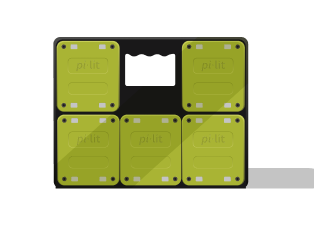
pi-lit Smart Sequential Road Flares are sold as Professional Rechargeable kits in 4, 6, and 10 sets, and as Commercial and Fleet Alkaline kits in 4 and 6 sets. Docking stations are available for rechargeable 6-set and 10-set kits. For a side-by-side explainer of fusees versus LED flares, see LED Road Flares vs. Fusee Flares. Burn times and ratings are in How Long Do Road Flares Burn?. Device types are in Types of Emergency Road Flares.
How to think about total cost of ownership
Fusees look cheap per unit, but they cost money every time they are used. An LED kit costs more up front and nothing per incident. To compare them for your fleet, gather five numbers from your own records, not from a brochure:
- How many vehicles carry warning devices.
- How many incidents or closures each vehicle handles a year, and how long each one lasts.
- How many fusees you burn per hour on scene, and what you pay per fusee.
- Storage, replacement and disposal costs for unused or damaged fusees. Many local hazardous waste programs take leftover fusees, for example Hennepin County and King County.
- For LED kits: the kit price, the warranty, rated charge cycles, and whether docking or charging hardware is included.
Police departments can plug their own numbers into the pi-lit fusee cost calculator. For fleets and utilities, request a quote and we will price the kit, docking stations and cloud plan for your crew count.
What to look for in sequential LED road flares
- Run time in the pattern you use. Ask for hours in the sequential pattern at normal brightness, not just the best-case number.
- A published crush rating. Flares on the roadway get run over. Ask for the tested load.
- Sync with no setup steps. Can a crew turn the flares on, set them down and walk away? No pairing, no pre-numbering.
- Reverse sequence. Crews deploy walking with or against traffic, so the direction should flip with one button.
- Glove-friendly deployment. Flares that turn on when lifted from the case are faster in winter gear.
- Weather and cold performance. Weatherproof housing, plus an honest statement of how cold shortens run time.
- FMCSA status for your trucks. If commercial vehicles will use the flares in place of triangles or fusees, ask for the Federal Register exemption notice and its expiration date.
- Color rules. Check which colors your agency or exemption allows. The pi-lit exemption covers orange and red.
- Charging that fits the vehicle. Vehicle docking stations and 12/24V DC charging keep sets ready without a separate charging routine.
- Connected driver alerts. Does a deployment send a digital alert upstream to drivers, automatically, with no tablet taps?
- Deployment records. Can supervisors pull a report of when and where flares were deployed?
- Contract and purchase order buying. Is the product on a cooperative contract your agency belongs to? Will the vendor quote on a purchase order or help with grant letters?
- Warranty and a trial. Ask for the warranty term in writing, and for a field evaluation kit before a fleet order.
pi-lit checks every box on this list. See the Smart Sequential Road Flares or request a Try Before You Buy kit.
Which setup fits your team
Police departments: LED road flares for traffic stops and crash scenes
Pull a 6-flare or 10-flare rechargeable kit from the trunk dock and set a sequential taper in about 60 seconds, with no flame or smoke in the patrol trunk. Buy through Sourcewell or PCA OD-447-26.
Law enforcementUtility fleets: LED road flares for line crews
Sequential flares on the cones crews already carry guide drivers around the bucket, and piLINK sends an upstream driver alert when the light bar comes on. Flame-free near gas leaks and vaults.
UtilityDepartments of Transportation: sequential lights for lane closures
Sequential flares and Smarter Cones for tapers, with every deployment logged in pi-lit Cloud. Quoted on Sourcewell or PCA.
Department of TransportationFire and rescue: fast scene guidance
Sequential flares set a clear path around the apparatus in under 60 seconds and run 20+ hours, so crews set them once and stay out of the lane.
Fire and rescueTrucking and commercial fleets: in place of triangles
Covered by an FMCSA exemption through June 27, 2028, so they can replace $30 plastic triangles and single-use flares in orange or red.
TruckingTraffic control contractors and roadside assistance
Traffic control and roadside assistance crews use the same sequential kits to mark a stopped vehicle or a short closure.
Buying on contract
Public agencies can often buy without running their own bid.
- BuyBoard Contract #803-26. pi-lit is an awarded BuyBoard vendor for Highway Safety and Traffic Control Products. Eligible members of the Texas Local Government Purchasing Cooperative can buy the listed sequential flare and Smarter Cone sets (6 Set and 10 Set) without a separate bid. The contract runs June 1, 2026 to May 31, 2027, with possible one-year renewals. See BuyBoard details.
- Sourcewell and PCA. Sequential LED road flares can be quoted on Sourcewell, and on the Purchasing Cooperative of America (PCA Contract OD-447-26). Request a contract quote.
- Washington and Oregon. Agencies in Washington and Oregon can contact pi-lit for current state-contract purchasing details.
- Purchase orders and grants. Tax-exempt purchase orders are accepted. pi-lit can prepare product package quotes, justification letters and product scope letters for OTS (Office of Traffic Safety) grant requests.
Sources
- National Institute of Justice, Evaluation of Chemical and Electric Flares
- Orion Safety Products, Highway FAQ (lighting, burn ratings, storage, weather)
- 49 CFR 393.95, Emergency equipment on all power units, eCFR
- Federal Register 2023-13205, Pi Variables, Inc. application for an exemption (effective June 27, 2023)
- Federal Register 2026-03261, Liquid-Burning Flares (removes oil pots as an accepted warning device, effective March 23, 2026)
Frequently Asked Questions
Are sequential LED road flares a legal replacement for fusees?
It depends on who is using them. On commercial motor vehicles, federal rules require 3 reflective triangles or at least 6 fusees, and other devices may be used only in addition to those, unless a product holds an FMCSA exemption. pi-lit Smart Sequential Road Flares have that exemption through June 27, 2028. Since March 23, 2026, liquid-burning flares (oil pots) are no longer an accepted warning device for stopped commercial vehicles. For police, fire and highway crews, your agency's own policy and the traffic control standards it follows decide what you deploy.
What makes a flare "sequential"?
Sequential flares flash one after another along the line, so the light appears to move in the direction drivers should merge. pi-lit flares have 6 patterns: 4 sequential, 1 simultaneous and 1 steady burn. The sequence direction reverses with a button press.
How long do LED road flares last compared with a fusee?
Highway fusees commonly burn 15 to 30 minutes, and fusees carried as required warning devices on commercial vehicles must burn for 30 minutes. pi-lit sequential flares run 20+ hours in the default wave pattern at normal brightness, and recharge in about 6 hours.
Can a commercial truck carry LED flares instead of triangles?
Only if the product has an FMCSA exemption. pi-lit Smart Sequential Road Flares are covered from June 27, 2023 through June 27, 2028 (Federal Register document 2023-13205). Motor carriers may use them in orange or red in place of triangles or fusees, deploying at least 3 flares as 49 CFR 392.22 requires.
Do LED road flares work in rain, snow and wind?
pi-lit flares are weatherproof, crush-rated to 30,000 lbs, and built for heavy trucks, snowplows, rain and sub-zero wind chill. Cold weather shortens battery run time. A fusee can go out if it lies in a puddle.
How do the flares sync, and do we have to program them?
No programming or pre-numbering. Turn them on and set them down, and they link and sequence automatically in under 60 seconds over a 1.5-mile radio range. Pair mode syncs several sets together.
What does "connected" mean for a road flare?
Through the pi-lit app or a piLINK cellular gateway, a deployment connects to pi-lit Cloud. Flare locations can reach navigation apps before drivers arrive, and supervisors see live device status, logged alerts and events, impact notifications, and reports by date range.
Can our agency buy without a bid?
Eligible BuyBoard members can buy the listed sets on Contract #803-26 without a separate bid. pi-lit also quotes against Sourcewell and PCA Contract OD-447-26, and accepts tax-exempt purchase orders.
Can we test a kit before a fleet order?
Yes. Contact pi-lit to request a Try Before You Buy field evaluation kit or a formal volume quote.